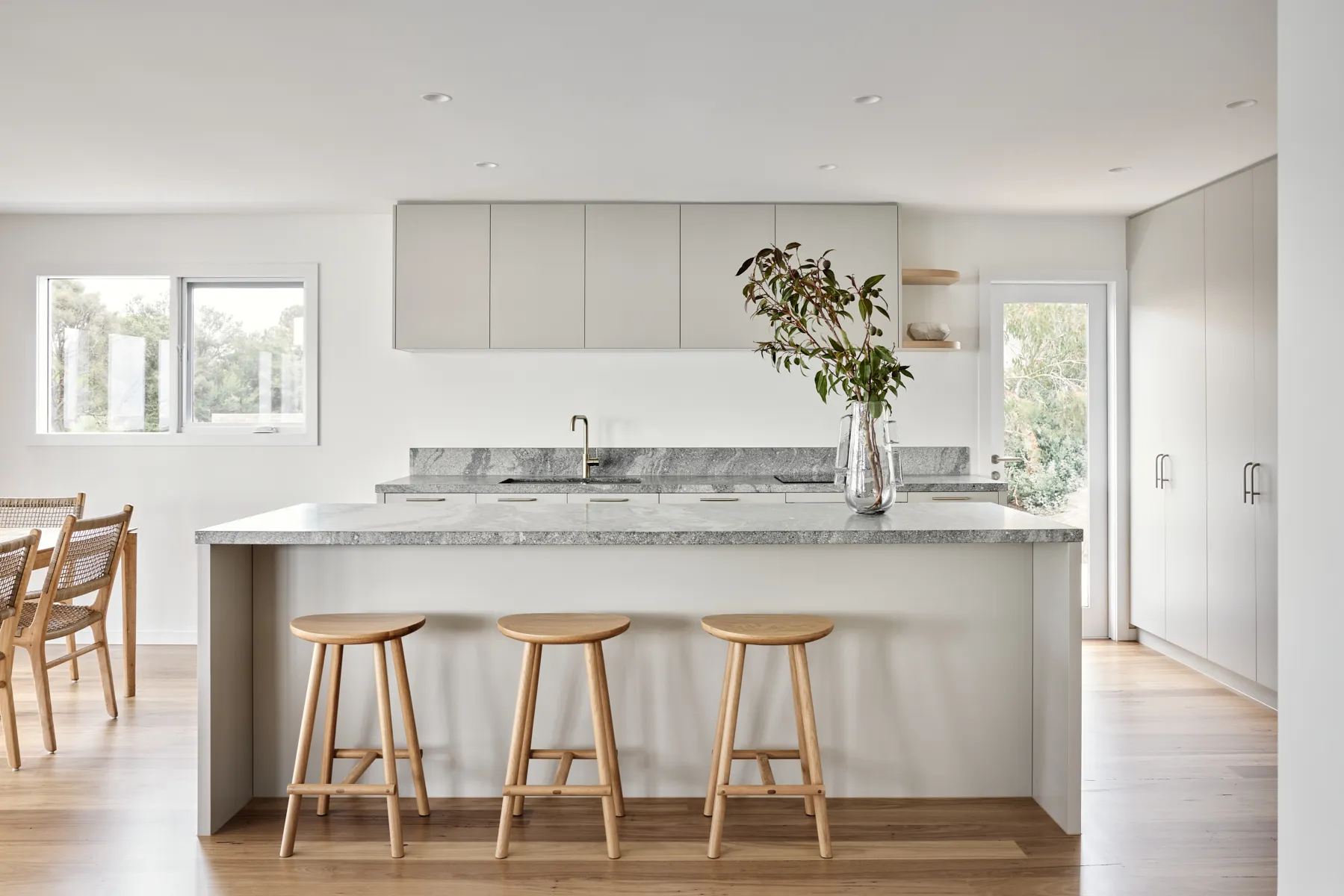
The kitchen is the heart of the home, and the benchtop is its focal point. When you embark on a kitchen renovation or new build, one of the biggest questions is always: What is the best stone for a kitchen benchtop? It’s a decision that requires balancing stunning visual appeal with essential durability and practical, everyday performance.
The market is full of beautiful natural stone options, from the timeless elegance of marble and the robust reliability of granite to the modern, hard-wearing beauty of quartzite. Making the right selection for your premium kitchen benchtop can feel daunting.
Fortunately, RMS Traders is here to help. In this essential RMS Traders Guide, we cut through the confusion, comparing the top contenders to ensure you choose a high-quality, long-lasting stone benchtop that perfectly suits your style and life, making your renovation a success. Let’s find the perfect stone that elevates your kitchen.
Which Stones are used for benchtops in Australian homes?
The selection of stone for kitchen benchtops/countertops in Australian homes is currently dominated by a mix of natural and high-performance engineered options. Historically, Engineered Quartz was the market leader due to its wide range of colours and non-porous nature, but its use is rapidly diminishing due to the incoming ban on its fabrication. This shift has placed Natural Stone, specifically durable options like Granite and the elegant, resilient Quartzite, back at the forefront for those seeking unique, authentic surfaces. Granite offers exceptional heat and scratch resistance, while Quartzite is prized for mimicking the luxury look of marble with superior practical performance.
For modern homes seeking zero-maintenance luxury, Porcelain Slabs have become the primary high-performance choice. Porcelain is non-porous and highly resistant to heat, scratches, and UV, making it perfect for stylish indoor benchtops and increasingly popular for outdoor countertops. While classic Marble remains a perennial high-end choice, it is usually reserved for feature areas. Overall, the Australian market is focusing on materials like Quartzite and Porcelain that deliver both high aesthetic value and long-term durability suitable for a busy lifestyle.
Choosing the best benchtops for your kitchen depends on your needs and style. The RMS Traders team is here to help you choose the best stone for your kitchen benchtops based on what really suits you. Whether you want your kitchen to seem timeless, if you want your benchtops to just look nice, or even if you think the cheapest choice will be better, or if low maintenance will be the most important factor because you have a very busy kitchen and have no time, this RMS Traders blog post will walk you through the most used benchtops in Australia. We will compare them and help you pick the best one for your home.
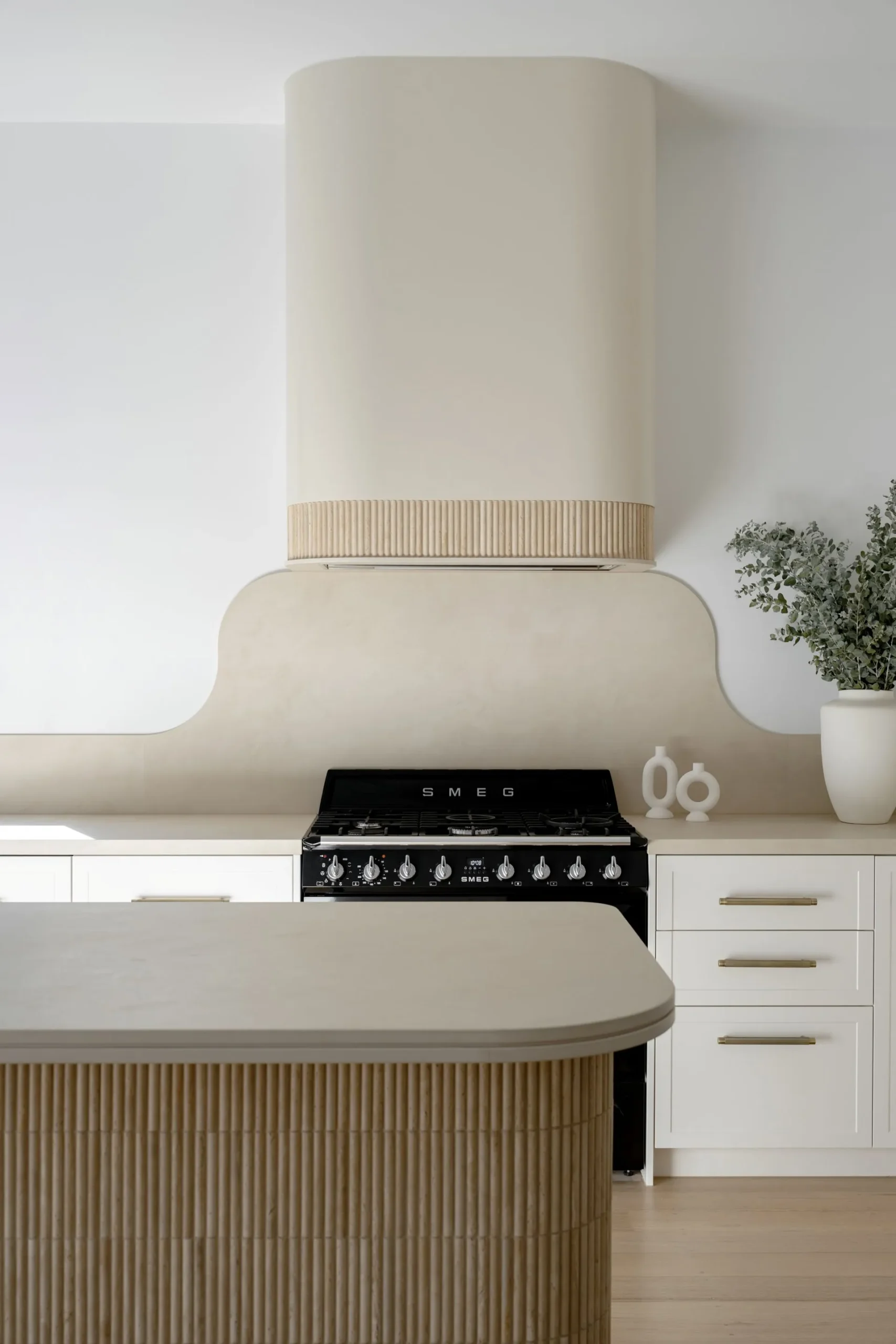
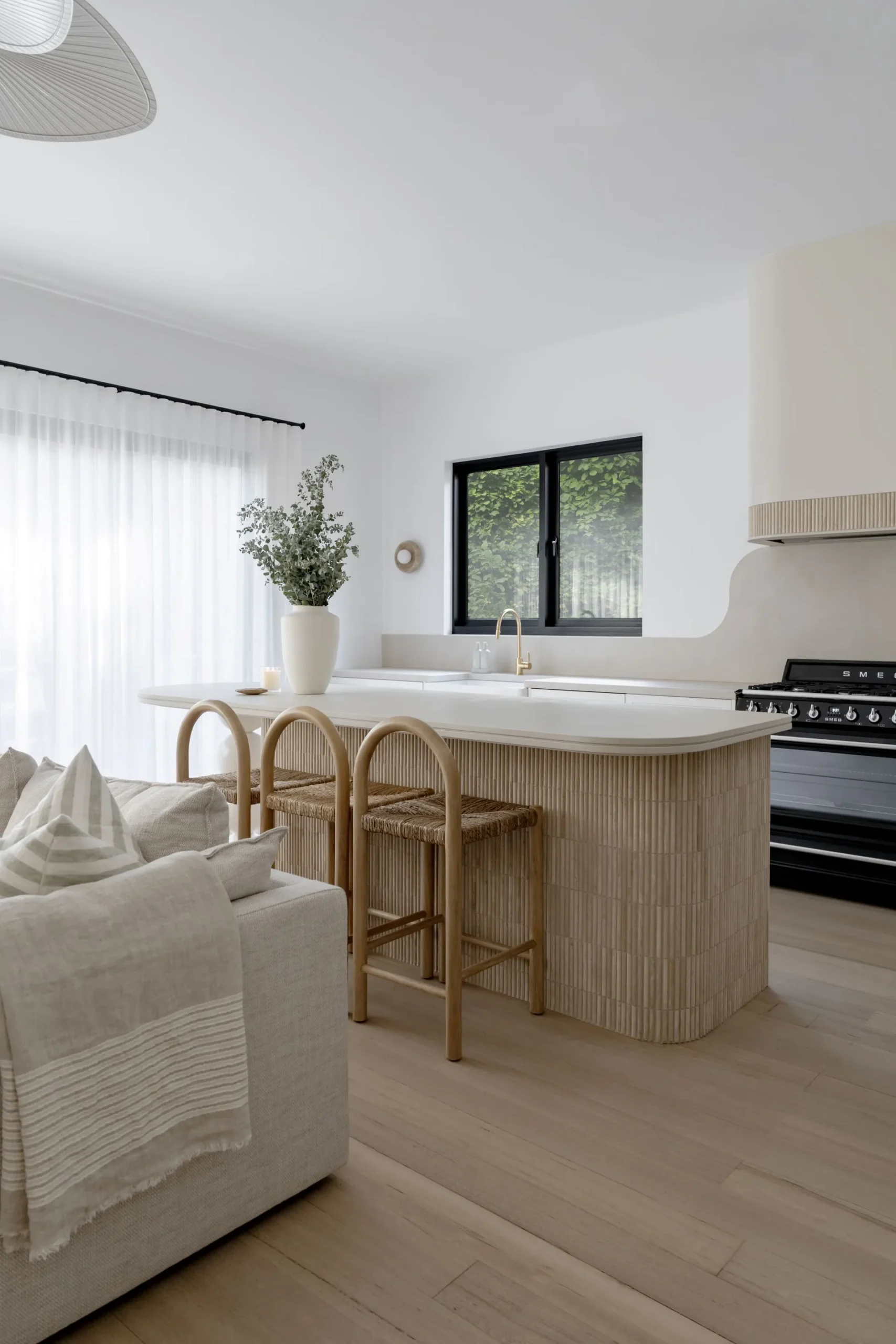
The Ultimate Comparison Breakdown
Timeless Benchtops: If Style is Your Priority
Marble wins the aesthetic contest every time. Names like Calacatta and Carrara are synonymous with luxury and have been used in architecture for centuries. If your primary goal is to create a show-stopping, timeless kitchen, marble is the gold standard for benchtops.
- Style Alternative: Quartzite. It offers the dramatic, elegant veining of marble but with superior hardness, giving you the best of both worlds.
Durable Benchtops: Built for the Busiest Kitchens
For the household with a lot of heavy use, hot pots, and scraping plates, Granite is the king of durability among natural stones for benchtops. It’s an igneous rock, formed under intense heat, giving it superior resistance to heat and etching.
- Durability Alternative: Engineered Stone. While less resistant to extreme heat than granite, its non-porous surface makes it virtually stain-proof, which is a major win for busy, spill-prone kitchens.
Low-Maintenance Benchtops: Easy Care, High Shine
This is where Engineered Stone (Quartz) shines for benchtops. Because it is manufactured with resins, it is non-porous and never needs sealing. A quick wipe-down is all it takes to keep it looking new for years.
- Natural Stone Alternative: Granite is the lowest-maintenance natural stone option. A high-quality sealant applied correctly will protect it for years.
Choosing the right benchtop is a personal journey, but by weighing your lifestyle against these key material properties and considering your budget and future plans, you can ensure the benchtops you choose will not only look stunning but will also perform flawlessly for decades.
Making Your Final Benchtop Choice
Ultimately, the “best” benchtop isn’t the most expensive or the most durable; it’s the one that fits your life. If you love the look of marble but hate the thought of maintenance, consider its sturdy cousin, Quartzite, or a high-quality Engineered Stone that mimics its veining. If budget and low maintenance are your chief concerns, Engineered Stone or a good quality Granite will be your strongest allies, at RMS Traders, we believe that seeing and touching the stone is the final step. Our team is here to walk you through our wide selection of slabs, helping you match the right material to your specific vision and daily demands.
Granite Benchtops: Durability, Style, and Maintenance
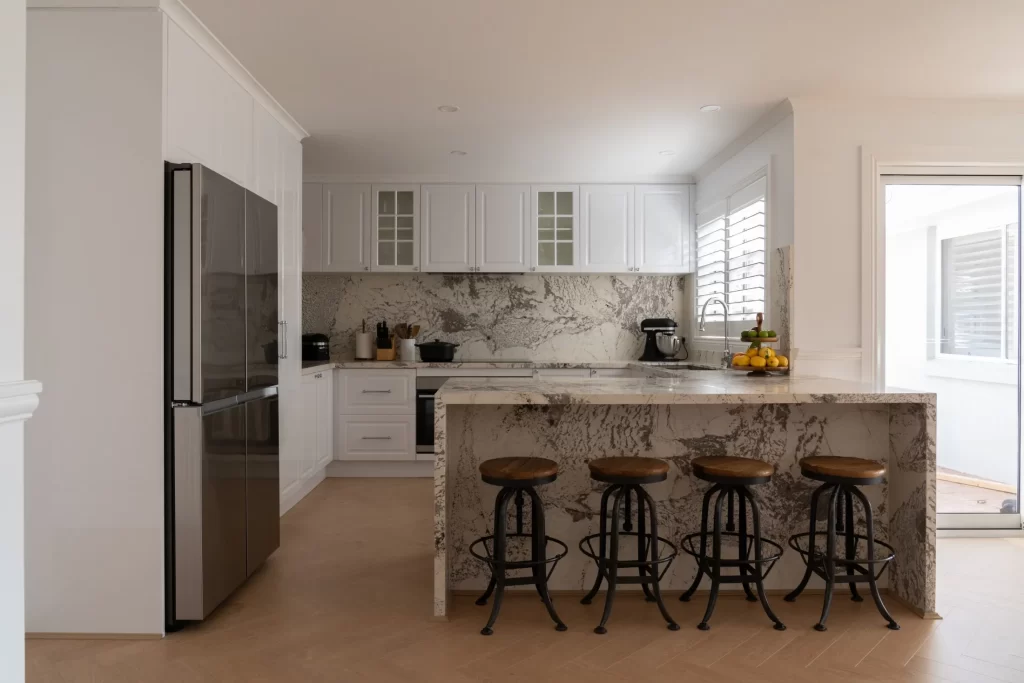
Granite is a natural igneous rock formed from cooled magma, composed mainly of minerals like quartz, feldspar, and mica. This formation process is what gives it its core properties:
Aesthetic Uniqueness:
Each slab has distinct and unpredictable patterns, colours, and veining. You can choose from classic tones (black, white, grey) to more exotic shades.
Finish Variety:
It is commonly available in a high-gloss polished finish, but can also be chosen in a matte (honed) or textured (leathered) finish.
Porous Nature:
As a natural stone, granite is porous, meaning it requires sealing to prevent liquids from penetrating and causing permanent stains.
Pros of Granite Benchtops
| Benefit | Description |
| Exceptional Durability | It is one of the hardest natural stones. It is highly resistant to scratches, chips, and daily wear and tear. |
| High Heat Resistance | Granite can withstand high temperatures without scorching or discolouring, allowing you to place hot pots and pans directly on the surface (though using a trivet is always recommended to prevent thermal shock). |
| Adds Property Value | Granite is considered a premium, luxurious finish that significantly enhances the visual appeal and resale value of your home. |
| Stain Resistance | Once properly sealed, granite is highly resistant to most stains, making it a hygienic choice for food preparation. |
Cons of Granite Benchtops
| Drawback | Description |
| Sealing is Required | Due to its natural porosity, granite must be sealed upon installation and typically re-sealed every 1–3 years to maintain its stain resistance. |
| Initial Cost | Granite is generally more expensive than materials like laminate or some engineered stones, though its longevity makes it a good long-term investment. |
| Heavy Weight | It is a dense, heavy stone that requires sturdy cabinetry for support and professional installation to ensure stability and safety. |
| Lack of Uniformity | The natural variations mean that achieving a perfectly consistent colour or pattern across multiple slabs is impossible. You must inspect and select your exact slabs before installation. |
Granite Countertop Care and Maintenance
Granite is relatively low-maintenance once properly sealed. A simple routine is all that is needed:
- Daily Cleaning: Wipe down the surface with a soft cloth, warm water, and a mild, pH-neutral dish soap. Rinse thoroughly and dry to prevent water spots.
- Avoid Harmful Chemicals: Never use harsh chemicals, abrasive cleaners (like oven cleaner), bleach, or highly acidic substances (like vinegar or citrus) directly on granite, as they can etch the surface or break down the sealant.
- Use Trivets: While heat-resistant, it’s safest to use trivets or heat pads under extremely hot items to protect the sealant and prevent potential thermal shock.
Reseal Regularly: Follow your stone supplier’s recommendation for re-sealing, typically every one to three years, to ensure maximum stain protection.
Quartzite Benchtops: The Natural Stone That Rivals Marble’s Look and Granite’s Strength
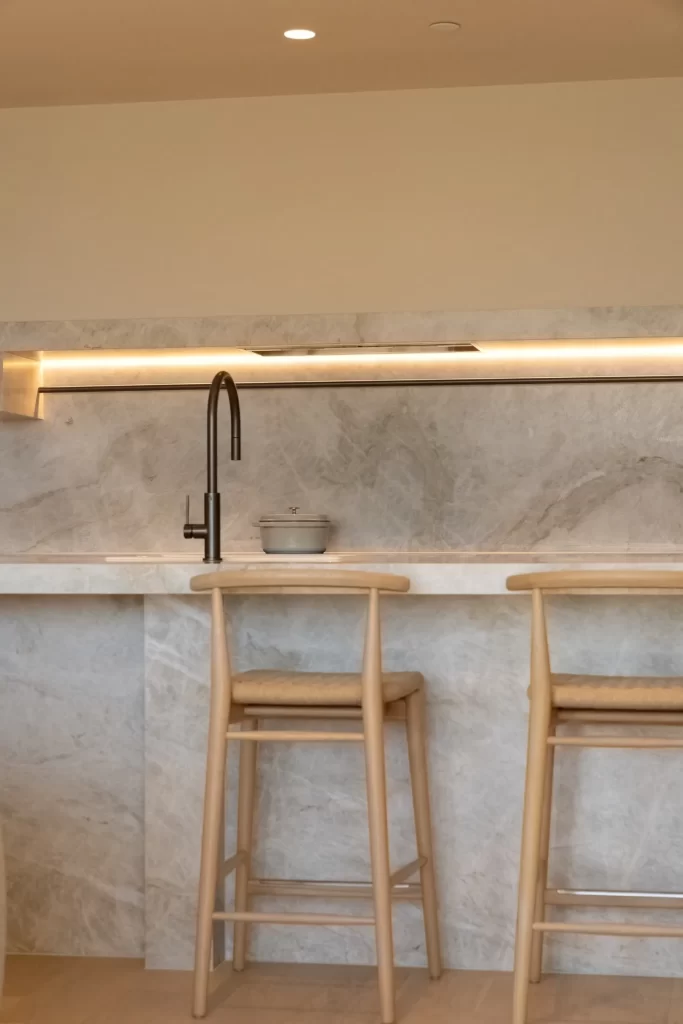
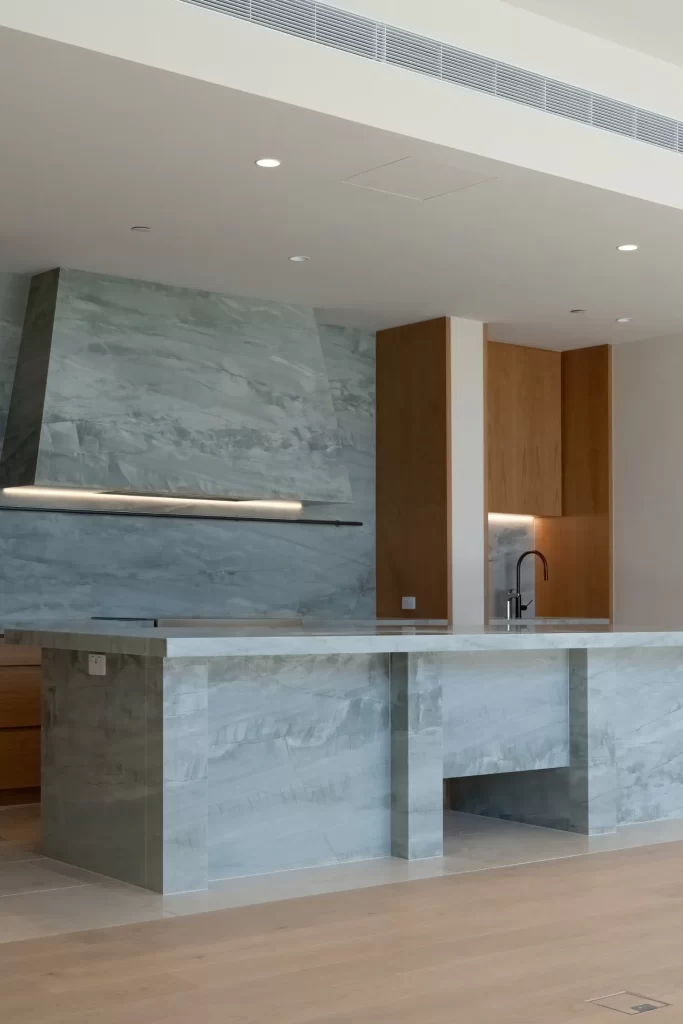
Quartzite is a highly popular natural stone choice for benchtops, prized for its unique combination of luxurious aesthetics, often mimicking the dramatic veining of marble, with the incredible durability typically associated with granite. It is a metamorphic rock formed from quartz-rich sandstone under extreme heat and pressure, resulting in a dense and hard material.
Aesthetic Uniqueness:
It often features elegant, dramatic veining and swirling patterns, closely resembling the prized look of marble (like Calacatta or Carrara) but with a slightly glassier appearance.
Natural Hardness:
Genuine quartzite is extremely hard and dense, ranking around 7 on the Mohs hardness scale, making it one of the toughest natural stones available for kitchen use.
Porous Nature:
As a natural stone, it can have some level of porosity, which varies widely between slabs. This means most quartzite requires sealing, although it is less porous than marble.
Composition:
It is primarily composed of quartz, giving it its exceptional physical strength and resistance properties.
Pros of Quartzite Benchtops
| Benefit | Description |
| High Durability | Extremely hard and durable. It is highly resistant to scratching, chipping, and heavy wear, making it excellent for busy kitchens. |
| Marble Look, Granite Strength | It provides the luxurious, high-end look of marble but with superior resistance to the typical wear and tear issues of softer stone. |
| Etch Resistance | Genuine quartzite is highly resistant to acidic substances (like vinegar and citrus juice) that can easily etch and dull the surface of marble. |
| Heat & UV Resistance | It can easily withstand high temperatures. It is also UV resistant, making it a reliable and non-fading option for outdoor kitchen benchtops. |
Cons of Quartzite Benchtops
| Drawback | Description |
| High Initial Cost | Quartzite is a premium, high-demand material and is often one of the more expensive natural stone options available. |
| Requires Sealing | It is still a natural stone, and depending on the specific slab’s porosity, it requires periodic sealing (typically every 1–2 years) to ensure maximum stain protection. |
| Density & Weight | It is extremely heavy and dense, necessitating sturdy cabinet support and professional installation by specialized fabricators. |
| Risk of Mislabeling | Some softer stones (dolomitic marble) are sometimes incorrectly sold as quartzite. Always verify the stone’s hardness before purchase. |
Quartzite Countertop Care and Maintenance
Quartzite is durable, but proper care is essential to protect its sealant and maintain its appearance.
Sealing:
Regular sealing (typically every 1–2 years) is necessary to close off the stone’s pores and prevent liquids from causing permanent stains. If water no longer forms beads on the surface, it needs resealing.
Daily Cleaning:
Wipe the surface with a soft cloth, warm water, and a pH-neutral cleanser or mild dish soap. Dry the surface completely to avoid mineral deposits.
Avoid Harsh Chemicals:
Do not use common abrasive cleaners, ammonia, vinegar, or harsh chemicals, as they can wear down the sealant and potentially etch or dull the stone’s finish over time.
Wipe Spills Immediately:
While etch-resistant, it is best practice to blot up spills (especially oils and highly pigmented liquids) as quickly as possible to prevent them from sitting on the sealant.

Characteristics of Marble benchtops
Marble is primarily composed of calcium carbonate (limestone that has been recrystallised by heat and pressure). This composition dictates its classic beauty but also its susceptibility to acid:
Aesthetic Uniqueness:
Known for its dramatic, soft, and unique veining, which ranges from subtle grey lines (like Carrara) to bold, striking patterns (like Calacatta). No two slabs are identical.
Soft Stone:
Compared to granite and quartzite, marble is a softer stone, making it more prone to scratching and chipping. It is a “living” finish that develops a patina (natural signs of wear) over time.
Cool Surface:
Marble naturally retains a cooler temperature, which is highly beneficial for tasks like rolling out pastry dough or baking.
High Porosity:
Marble is relatively porous, meaning it can readily absorb liquids, oils, and pigmented substances, making proper sealing a non-negotiable requirement.
Pros of Marble Benchtops
| Benefit | Description |
| Timeless Luxury | Instantly recognised as a premium material, marble adds an unmatched air of opulence and sophistication that never goes out of style. |
| Increases Home Value | Due to its association with high-end design, installing marble benchtops can significantly enhance the perceived and actual resale value of a property. |
| Excellent for Baking | The natural coolness of the stone is ideal for kitchen tasks requiring a low surface temperature, such as working with chocolate or dough. |
| Heat Resistance | Marble is naturally heat-resistant and can withstand hot temperatures without scorching, although sudden changes in temperature can still be a risk. |
Cons of Marble Benchtops
| Drawback | Description |
| Susceptible to Etching | This is the biggest drawback: Marble is highly sensitive to acidic substances (vinegar, lemon juice, wine, soft drinks) which will chemically react with the stone and cause etching (dull, permanent marks). |
| Prone to Staining | Being porous, marble will absorb spills, particularly oils and deeply coloured liquids (like beetroot or coffee), if the surface is not well-sealed or spills are left too long. |
| Softness & Scratching | It is softer than many other stone options. Knives, sharp objects, and abrasive cleaners can easily cause micro-scratches and chips. |
| High Maintenance | Marble requires constant vigilance, immediate clean-up of spills, regular sealing, and the use of only specific pH-neutral cleaners. |
Marble Countertop Care and Maintenance
Marble requires a diligent care routine to preserve its beauty and minimise damage, particularly from etching and staining.
Immediate Spill Cleanup:
This is the most crucial step. Blot (do not wipe or rub) acidic or coloured spills immediately using a paper towel, then clean the area with mild soap and water.
Use Only pH-Neutral Cleaners:
Avoid using common household cleaners that contain acid (like vinegar or lemon) or ammonia, as these will strip the sealant and etch the stone. Only use cleaners specifically labelled for natural stone.
Regular Sealing:
Due to its high porosity, marble benchtops must be sealed regularly, often every 6 to 12 months, depending on usage and the type of sealer applied. If water stops beading on the surface, it’s time to reseal.
Protect the Surface:
Always use trivets under hot pots and pans, and coasters under glasses and bottles (especially alcohol or citrus). Use cutting boards for all chopping tasks.
Limestone Benchtops: Durability, Style, and Maintenance Explained
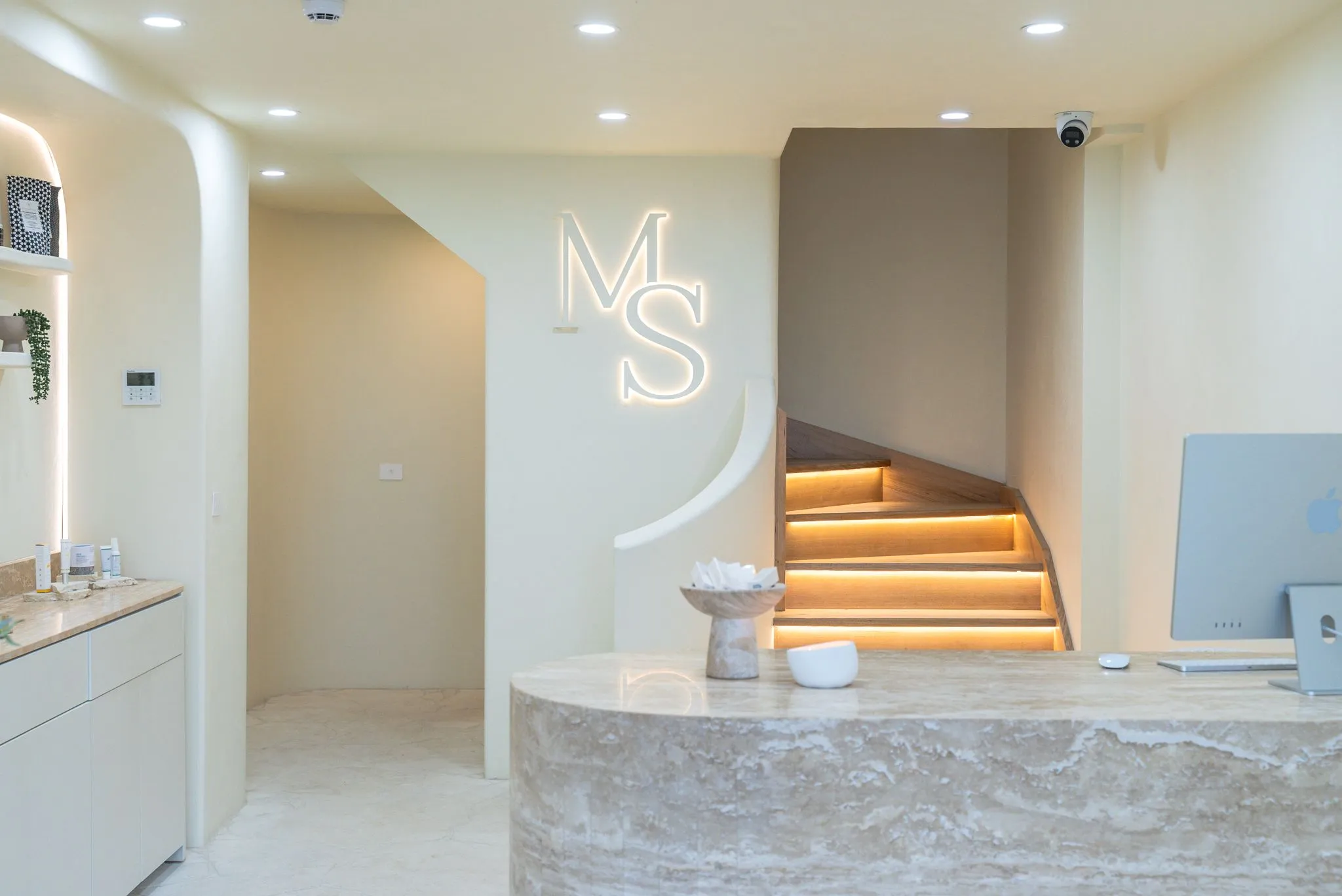
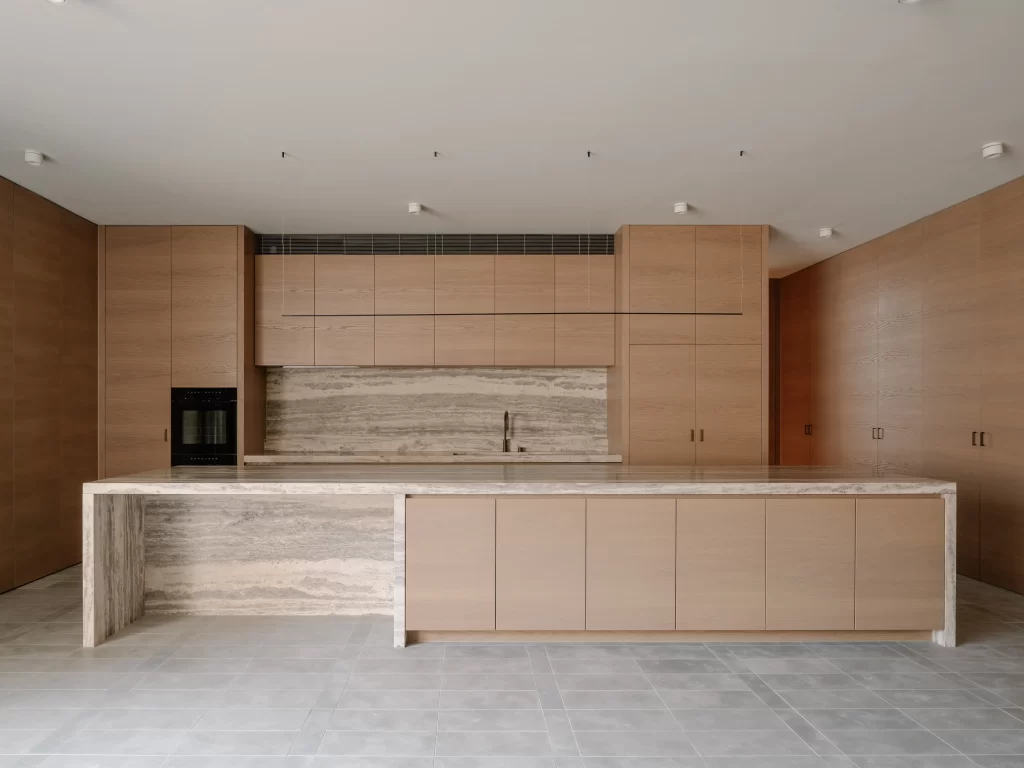
Limestone benchtops offer a beautiful, subtle, and earthy aesthetic that is distinct from the dramatic flair of marble or the speckling of granite. As a sedimentary rock, limestone is typically softer and more porous than its metamorphic and igneous counterparts. It is often chosen for its elegant, matte appearance and ability to bring warmth and a connection to nature into the kitchen space, but it requires careful maintenance similar to marble.
Limestone is a natural sedimentary rock composed primarily of calcium carbonate and formed from the skeletal fragments of marine organisms. This composition gives it unique characteristics:
Aesthetic Uniqueness:
Features muted, matte tones, ranging from cream and beige to soft grey. It typically has subtle patterns and can contain visible fossils or shell fragments, enhancing its organic feel.
Soft Stone:
Limestone is a relatively soft stone (lower on the Mohs scale than marble). This makes it easier to scratch and chip compared to harder stones like granite or quartzite.
High Porosity:
It is highly porous, meaning it readily absorbs liquids. Proper, high-quality sealing is absolutely essential to prevent moisture absorption and deep staining.
Reactive Composition:
Like marble, its calcium carbonate base makes it highly reactive to acids, leading to immediate etching if exposed to common kitchen acids.
Pros of Limestone Benchtops
| Benefit | Description |
| Earthy, Natural Look | Provides a unique, calming, and organic aesthetic with subtle variations, suitable for contemporary, coastal, and farmhouse kitchen designs. |
| Cool Under Touch | Like marble, limestone maintains a naturally cool temperature, which is beneficial for food preparation tasks like baking and pastry making. |
| Unique Finishes | It can be finished in honed (matte) or brushed textures, which helps disguise fingerprints and minor surface wear better than a high-polish finish. |
| Versatile Colour Palette | The neutral colour spectrum (creams, sands, taupes) offers excellent versatility when pairing with different cabinet and wall colours. |
Cons of Limestone Benchtops
| Drawback | Description |
| Highly Susceptible to Etching | Due to its calcium carbonate base, any contact with acids (lemon juice, vinegar, wine) will cause immediate, dull, permanent etch marks on the surface. |
| Prone to Staining | It is highly porous and will quickly absorb coloured liquids and oils, resulting in deep stains if the sealant wears down or spills are not cleaned immediately. |
| Low Durability | Being a soft stone, limestone is more vulnerable to scratching, chipping, and denting from impact than harder benchtop materials. |
| High Maintenance Commitment | Requires daily vigilance, careful cleaning product selection, and frequent, professional sealing to protect against moisture and staining. |
Limestone Countertop Care and Maintenance
Limestone requires dedicated care, similar to marble, focusing heavily on sealing and avoiding acidic cleaners.
Immediate Spill Cleanup:
All spills, particularly acidic liquids or oils, must be blotted up immediately with a soft cloth. Never let spills sit, as they will quickly penetrate the stone and cause etching or staining.
Use Only pH-Neutral Cleaners:
Avoid all acidic cleaners (vinegar, ammonia, citrus-based products), as well as harsh chemicals and abrasive pads. Use only warm water and a small amount of mild, pH-neutral dish soap or a dedicated stone cleaner.
Regular Sealing is Vital:
Due to its high porosity, limestone requires frequent sealing, often every 6 to 12 months, to maintain its stain resistance. This is the single most important maintenance step.
Protect the Surface:
Always use coasters under glassware and bottles, and trivets under hot items to protect the surface from thermal shock and prevent sealant degradation. Use cutting boards for all preparation.
Travertine Benchtops: Durability, Style, and Maintenance Explained
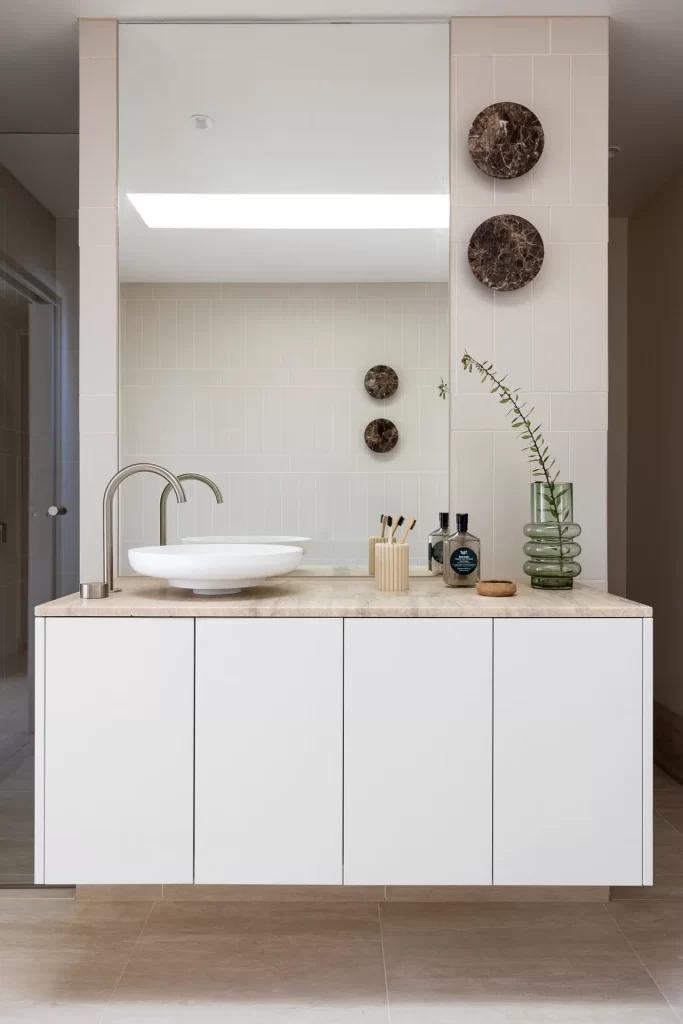

Travertine is a beautiful, highly porous form of limestone that is deposited by mineral-rich hot springs. Known for its distinct textured look, often featuring natural voids or pits (which are typically filled for benchtops), it brings a warm, earthy, and classic Mediterranean elegance to the kitchen. While it is a natural stone and shares many qualities with marble and limestone, its porous structure requires a very specific commitment to care.
Travertine is a sedimentary rock primarily composed of calcium carbonate. Its formation process near mineral springs gives it a unique texture:
Aesthetic Uniqueness:
Features an earthy colour palette (creams, beige, ivory, gold, walnut) and is characterized by distinct patterns and natural voids (pitting). It is often used in a honed (matte) and filled finish for benchtops to create a smoother, more usable surface.
Warm and Rustic Feel:
Travertine lends itself well to classic, rustic, or modern European villa designs, providing an unrefined, textured look.
Soft Stone:
It is one of the softer and more delicate natural stones (even softer than marble), making it vulnerable to scratching, chipping, and abrasion.
Extremely Porous:
Travertine is more porous than granite or even marble, meaning it readily absorbs liquids and requires high-quality, frequent sealing to prevent deep staining.
Pros of Travertine Benchtops
| Benefit | Description |
| Unique Earthy Appeal | Offers a distinctive texture and a warm, inviting colour range that provides a timeless, unrefined aesthetic. |
| High Heat Resistance | As a natural stone, travertine can easily withstand hot temperatures without melting or scorching, making it suitable for kitchen environments. |
| Design Versatility | Its neutral tones and unique texture pair well with various design themes, from modern minimalism to rustic farmhouse. |
| Eco-Friendly Choice | As a natural stone, it is a sustainable, earth-friendly material that requires minimal industrial processing compared to synthetic options. |
Cons of Travertine Benchtops
| Drawback | Description |
| Highly Susceptible to Etching | Like marble and limestone, its calcium content means it reacts immediately to acids (wine, citrus, vinegar), causing permanent dull spots (etching). |
| Very Prone to Staining | Its highly porous nature means that if the sealant is compromised or spills are left, it will absorb liquids and oils very quickly, leading to difficult-to-remove stains. |
| Vulnerable to Scratches | It is a soft stone that can scratch and chip more easily than harder materials like granite and quartzite, especially in high-impact areas. |
| High Maintenance Commitment | Requires frequent, meticulous care, including regular professional sealing (often semi-annually) and constant use of protective accessories. |
Travertine Countertop Care and Maintenance
Due to its high porosity and acid sensitivity, maintaining travertine benchtops requires dedication and the right products.
Immediate Spill Cleanup:
This is critical. Blot all spills, specially red wine, coffee, oils, and any acidic liquid, immediately to prevent them from penetrating the sealant and the stone’s pores.
Use Only pH-Neutral Cleaners:
Never use acidic cleaners (vinegar, lemon, or ammonia), abrasive pads, or general household chemical sprays, as these will permanently etch the surface and break down the protective sealant. Only use stone-specific, pH-neutral solutions.
Frequent Sealing is Mandatory:
Travertine requires a high-quality, deep-penetrating sealer applied more frequently than most other stones (often every 6–12 months) to maintain its stain resistance.
Protect the Surface:
Always use coasters under glasses and trivets under hot pans. Use cutting boards for all food preparation to prevent scratches and chipping.
Dolomite Benchtops
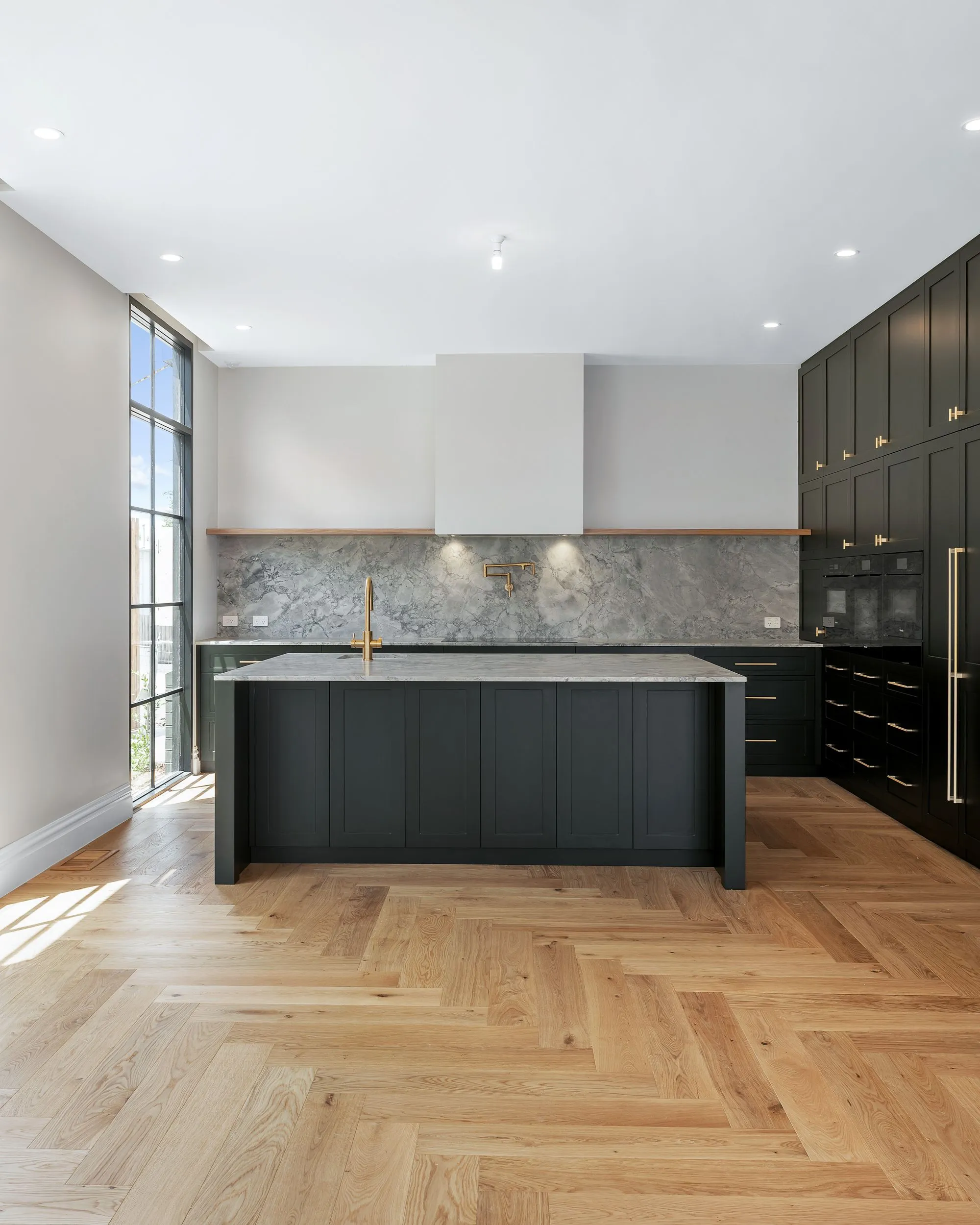
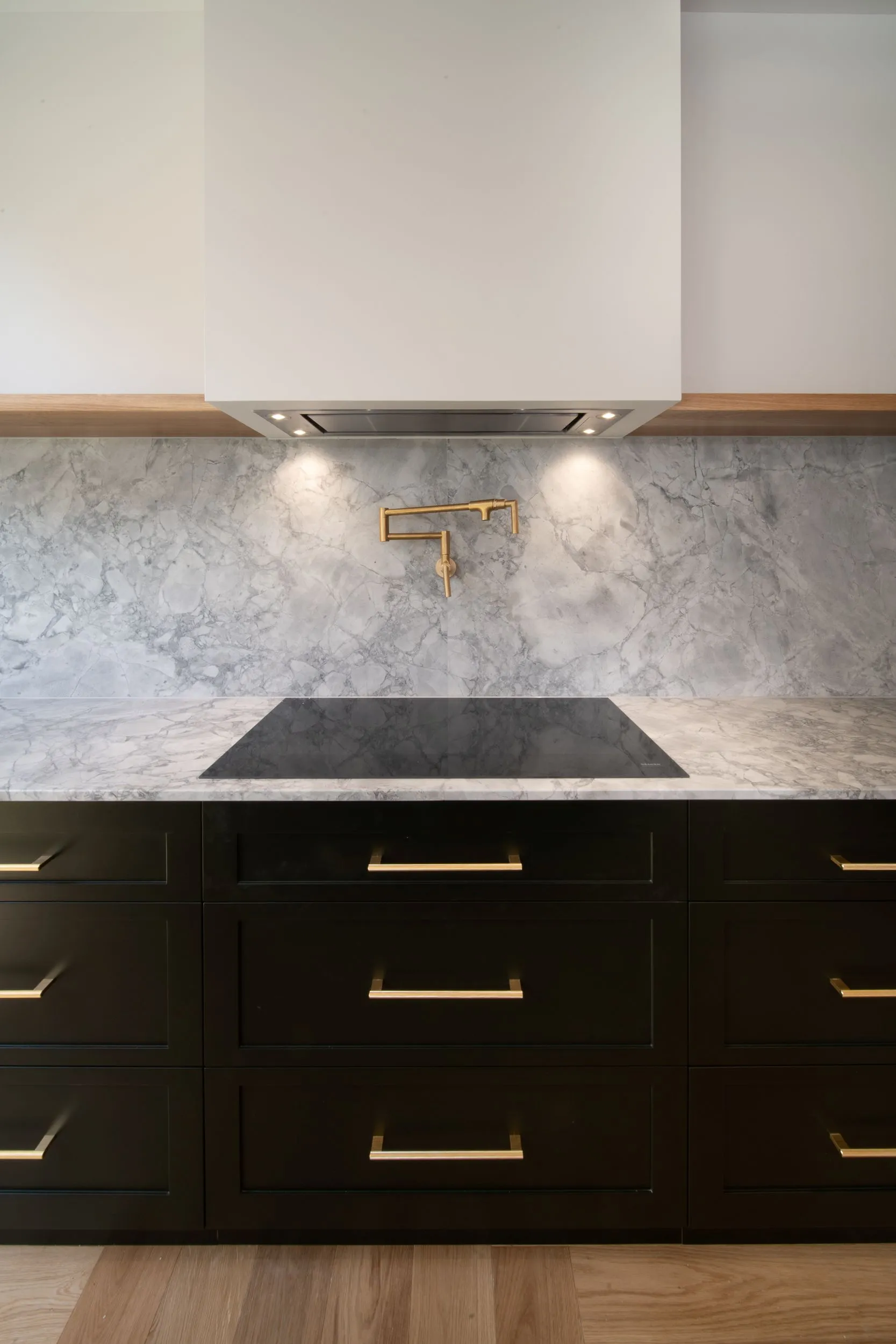
Dolomite (also known as Dolostone) is a sedimentary rock that is becoming increasingly popular for benchtops due to its aesthetic similarity to marble but with enhanced durability. It’s formed when limestone undergoes a chemical change, resulting in a unique composition that contains calcium magnesium carbonate. This structure places its hardness between that of the softer marble and the much harder granite or slate.
Key Features of Dolomite Stone
| Feature | Description | Comparison to Marble |
| Aesthetic Uniqueness | Offers a soft, luxurious, marble-like appearance with delicate veining. Commonly found in light shades like white, light grey, beige, and is highly sought after as “Super White Dolomite.” | Very similar in look, often mistaken for it, but with a potentially wider color range. |
| Density & Hardness | It is a dense stone, making it more resistant to scratching and general wear than marble. It typically rates between 3.5 and 4 on the Mohs scale. | Harder and more durable than marble. |
| Chemical Composition | Primarily calcium magnesium carbonate. This composition makes it susceptible to etching from acids, though it is often less reactive than pure calcite marble. | Etches from acids, similar to marble, but often slower to react. |
| Heat Resistance | Naturally heat-resistant, similar to other natural stones like granite. | Excellent heat resistance, superior to engineered quartz. |
Pros of Dolomite Benchtops
| Benefit | Description |
| Elegant, Marble-like Look | Achieves the classic, sophisticated look of marble with beautiful veining and soft, light color palettes, which are highly desirable for modern kitchens. |
| Good Durability | It is significantly harder and more resistant to scratches and chips than marble, making it more practical for high-traffic kitchen areas. |
| Heat Resistance | Handles hot pots and pans well, making it a safe and functional choice for cooking. |
| Affordability | Often positioned at a more affordable price point than premium marble or some high-end granite/quartzite options, offering excellent value for a high-end look. |
Cons of Dolomite Benchtops
| Drawback | Description |
| Acid Etching | Despite being harder than marble, dolomite is still primarily carbonate-based and is susceptible to etching from common kitchen acids (lemon juice, vinegar, wine). This damage appears as dull, white marks on the surface. |
| Porosity & Sealing | Dolomite is porous and requires regular sealing (typically every 6-12 months) to prevent oils and liquids from penetrating and causing stains. |
| Less Durable than Granite/Quartzite | While tougher than marble, it is softer than granite or quartzite and is still prone to scratching if cutting boards are not used consistently. |
| Maintenance Requirement | Requires diligent care, including quick cleanup of spills and use of non-acidic cleaners, to prevent etching and maintain its finish. |
Dolomite Benchtops: Elegant Style with Enhanced Durability
Dolomite (also known as Dolostone) is a sedimentary rock that is becoming increasingly popular for benchtops due to its aesthetic similarity to marble but with enhanced durability. It’s formed when limestone undergoes a chemical change, resulting in a unique composition that contains calcium magnesium carbonate. This structure places its hardness between that of the softer marble and the much harder granite or slate.
Key Features of Dolomite Stone
| Feature | Description | Comparison to Marble |
| Aesthetic Uniqueness | Offers a soft, luxurious, marble-like appearance with delicate veining. Commonly found in light shades like white, light grey, beige, and is highly sought after as “Super White Dolomite.” | Very similar in look, often mistaken for it, but with a potentially wider color range. |
| Density & Hardness | It is a dense stone, making it more resistant to scratching and general wear than marble. It typically rates between 3.5 and 4 on the Mohs scale. | Harder and more durable than marble. |
| Chemical Composition | Primarily calcium magnesium carbonate. This composition makes it susceptible to etching from acids, though it is often less reactive than pure calcite marble. | Etches from acids, similar to marble, but often slower to react. |
| Heat Resistance | Naturally heat-resistant, similar to other natural stones like granite. | Excellent heat resistance, superior to engineered quartz. |
Pros of Dolomite Benchtops
| Benefit | Description |
| Elegant, Marble-like Look | Achieves the classic, sophisticated look of marble with beautiful veining and soft, light color palettes, which are highly desirable for modern kitchens. |
| Good Durability | It is significantly harder and more resistant to scratches and chips than marble, making it more practical for high-traffic kitchen areas. |
| Heat Resistance | Handles hot pots and pans well, making it a safe and functional choice for cooking. |
| Affordability | Often positioned at a more affordable price point than premium marble or some high-end granite/quartzite options, offering excellent value for a high-end look. |
Cons of Dolomite Benchtops
| Drawback | Description |
| Acid Etching | Despite being harder than marble, dolomite is still primarily carbonate-based and is susceptible to etching from common kitchen acids (lemon juice, vinegar, wine). This damage appears as dull, white marks on the surface. |
| Porosity & Sealing | Dolomite is porous and requires regular sealing (typically every 6-12 months) to prevent oils and liquids from penetrating and causing stains. |
| Less Durable than Granite/Quartzite | While tougher than marble, it is softer than granite or quartzite and is still prone to scratching if cutting boards are not used consistently. |
| Maintenance Requirement | Requires diligent care, including quick cleanup of spills and use of non-acidic cleaners, to prevent etching and maintain its finish. |
Dolomite Countertop Care and Maintenance
Dolomite requires a moderate level of care to maintain its pristine, luxurious appearance, mainly focusing on preventing etching and staining.
Daily Cleaning:
Wipe with a soft cloth and a mild, pH-neutral dish soap or a stone-specific cleaner and warm water.
Sealing is Essential:
A quality penetrating sealer must be applied regularly (recommended every 6–12 months) to minimise porosity and resist staining from oils and liquids.
Avoid Acids:
Do not use cleaners containing vinegar, lemon, or ammonia, as they will cause etching. Wipe up all acidic spills immediately.
Protect the Surface:
Always use cutting boards to prevent scratches and trivets or heat mats for hot pots and pans to protect the sealer and surface from thermal shock.
Onyx Benchtops: Durability, Style, and Maintenance Explained
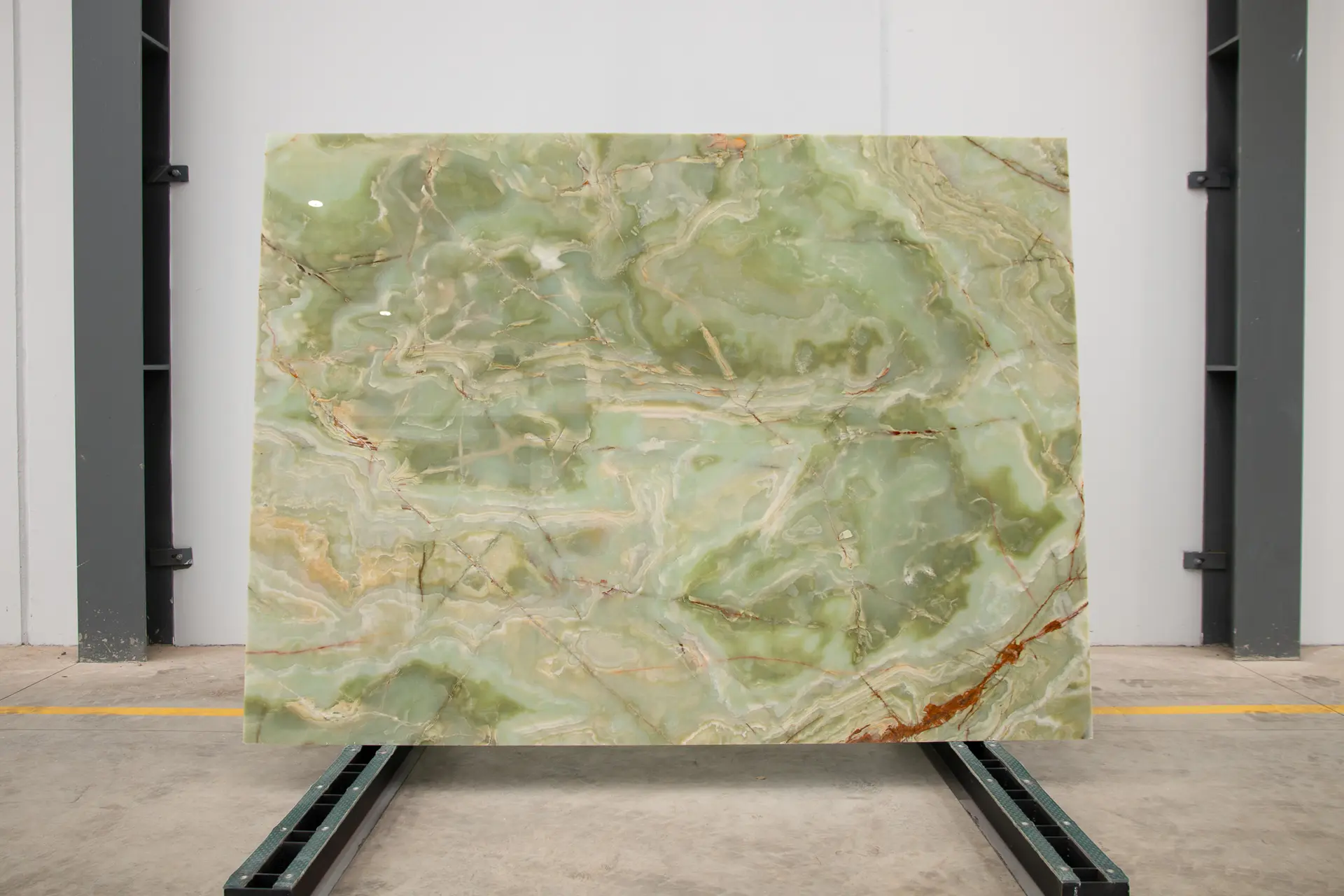
Onyx is a dazzling and unique natural stone that is unlike any other countertop material. It is a type of calcareous stone, formed from the deposition of calcite and other minerals from dripping water (similar to stalagmites in caves). Its primary draw is its dramatic veining and its translucency, which allows light to pass through the stone, making it a highly prized, show-stopping feature often used for bar tops, feature islands, and vertical applications.
Onyx’s unique formation process and composition (primarily calcite) result in distinct characteristics:
Aesthetic Uniqueness: Features highly dramatic, banded layers and rich, swirled veining in a wide array of colours, from creamy whites and pastels to vibrant blues and greens.
Translucence: This is its most defining trait. Onyx is one of the natural stone countertop materials that can be backlit, creating a stunning, luminous glow that highlights its natural patterns and veins.
Soft & Brittle:
Onyx is one of the softest natural stones used for benchtops. It is crystalline and brittle, making it highly fragile and prone to scratching, chipping, and cracking. Slabs are often reinforced with a fiberglass mesh backing.
Calcareous & Porous:
Like marble and limestone, it is calcium-based, highly porous, and extremely reactive to acids.
Pros of Onyx Benchtops
| Benefit | Description |
| Unmatched Luxury & Beauty | Creates an instant “wow” factor, establishing the space as highly sophisticated and custom-designed. |
| Backlit Capability | Its translucency allows for backlighting, turning the benchtop into an illuminated focal point, perfect for feature bars or islands. |
| Unique Appearance | Every slab is a one-of-a-kind piece of natural art with unpredictable patterns and vibrant colour bands. |
| Lightweight | Compared to very dense stones like granite or quartzite, onyx is often lighter, which can simplify some fabrication and installation tasks. |
Cons of Onyx Benchtops
| Drawback | Description |
| Extremely Fragile & Soft | It is easily scratched, chipped, and cracked. It is generally not recommended for heavy-use kitchen prep areas due to its low scratch resistance. |
| Highly Susceptible to Etching | Its calcite base means it reacts immediately with common kitchen acids (wine, citrus, vinegar), causing permanent dull etching marks. |
| Very High Maintenance | Requires constant care, immediate spill cleanup, and frequent, thorough sealing due to its high porosity and sensitivity. |
| High Initial Cost | Onyx is a rare and expensive stone, often priced similarly to high-end marble or beyond. Fabrication and installation costs are also higher due to the fragile nature of the material. |
Onyx Countertop Care and Maintenance
Onyx is best suited for low-traffic areas like powder rooms, decorative feature walls, or bar tops, where its beauty can be admired without the risk of heavy daily wear. Maintenance must be diligent.
Immediate Spill Cleanup:
This is vital. Blot spills instantly, particularly anything acidic or deeply coloured, to prevent both etching and staining.
Use Only pH-Neutral Cleansers:
Never use vinegar, ammonia, or any general household cleaners. These chemicals will damage the fragile surface and sealant. Use only specialised stone cleaners.
Frequent Sealing is Mandatory:
Due to its extreme porosity, onyx requires regular, often annual or semi-annual, professional sealing to provide even a minimal barrier against liquids and stains.
Protect the Surface:
Always use coasters, placemats, and trivets. Never cut directly on the surface, and avoid dropping heavy items on the benchtop.
Bluestone Benchtops: Durability, Style, and Maintenance Explained

Bluestone is a term used for several types of natural stone (often basalt, or a dense, fine-grained limestone in the Australian context) known for its distinctive dark blue-grey hues. Prized for its history, strength, and earthy, sophisticated aesthetic, Bluestone offers a unique countertop surface that provides a beautiful, muted alternative to granite or marble. While highly durable for flooring, its properties as a benchtop surface require specific care due to its porosity and composition. For more information, take a look at What is Bluestone? And What’s The Best Use For It page.
The term Bluestone often refers to a dense, tough stone (in Australia, often a type of basalt or dark limestone/sandstone) with these properties:
Aesthetic Uniqueness: Characterised by deep, rich colours ranging from dark charcoal grey to blue-grey, sometimes featuring subtle specks of colour or natural irregularities. It offers a sophisticated, earthy, and historically rich look.
Texture and Finish: Commonly supplied in a honed (smooth, matte) finish for benchtops, providing a very contemporary and subtle look.
Density: It is a very dense and strong stone, renowned for its longevity and ability to withstand heavy use in various applications.
Porosity Varies: Depending on its exact mineral composition (basalt is less porous, limestone is more porous), Bluestone generally has a relatively high porosity and requires mandatory sealing.
Pros of Bluestone Benchtops
| Benefit | Description |
| Excellent Durability | Known for its strength and robust nature. It is highly resistant to heavy wear and tear, making it a long-lasting benchtop option. |
| Unique Earthy Aesthetic | Its deep blue-grey colour offers a distinctive, sophisticated, and contemporary look that pairs beautifully with industrial or natural interior designs. |
| Heat Resistance | As a natural stone, it is highly heat-resistant and will not scorch or melt, providing a safe surface for a working kitchen. |
| Aesthetic of Patina | Bluestone is a “living” stone that often develops a rich, subtle patina over time, which many homeowners appreciate for its lived-in character. |
Cons of Bluestone Benchtops
| Drawback | Description |
| Susceptible to Etching | If the Bluestone is a variety of limestone (calcium-based), it will be highly sensitive to acids (vinegar, lemon, wine), resulting in permanent, dull etch marks. |
| High Porosity | Bluestone is porous and must be thoroughly and regularly sealed to prevent oil and coloured liquids from penetrating the stone and causing deep, dark stains. |
| Scratch Visibility | While durable, scratches and wear are more noticeable on very dark, honed finishes, especially when light catches the surface. |
| Heavy Weight | It is a very dense, heavy stone that requires professional fabrication and robust cabinetry underneath to support its considerable weight. |
Bluestone Countertop Care and Maintenance
Due to the risk of etching and staining, a careful and consistent maintenance routine is necessary to protect the natural beauty of Bluestone benchtops.
Immediate Spill Cleanup:
This is crucial. Blot all spills, particularly acidic items (citrus, wine, tomato) and oils, immediately to prevent etching and deep staining.
Use Only pH-Neutral Cleaners:
Never use general acidic cleaners, vinegar, or ammonia. These products will cause permanent etching damage. Use only warm water and a mild, pH-neutral dish soap or a cleaner specifically formulated for natural stone.
Regular Sealing is Mandatory:
Bluestone must be sealed upon installation and typically resealed every 1–2 years with a quality penetrating sealer to maintain its resistance to oils, grease, and moisture.
Protect the Surface:
Always use coasters under glasses and bottles and trivets under hot pots and pans. Use cutting boards for all food preparation.
Porcelain Benchtops: Durability, Style, and Maintenance Explained
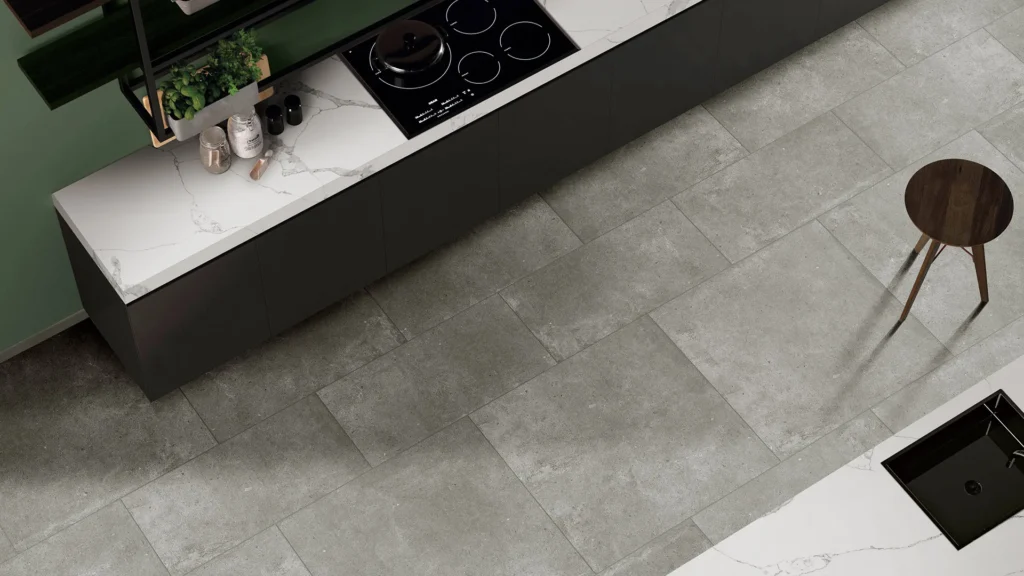
Porcelain benchtops are an ultra-compact, manufactured surface made from highly refined clay and mineral powders that are pressed under extreme pressure and fired at incredibly high temperatures. This process results in an exceptionally dense, non-porous, and tough material. Porcelain is celebrated for its ability to mimic the look of natural stones (like marble) without the high maintenance, making it one of the most durable and functional modern countertop choices.
Porcelain is an engineered product, not a natural stone, which gives it highly consistent and superior physical properties:
Aesthetic Uniqueness: Available in a vast array of colours and patterns, porcelain is renowned for its ability to flawlessly replicate the look of marble, wood, concrete, and metal. The pattern is printed onto the surface layer.
Non-Porous: Due to the high-temperature firing process, porcelain is completely non-porous. It does not require sealing and is highly resistant to bacterial growth.
Thin Profile: Porcelain benchtops are typically thinner than natural stone (often 6mm or 12mm), though they are often laminated or mitered to give a thicker edge profile.
UV Stability: Porcelain is completely immune to UV radiation, meaning it will not fade or discolour when used in outdoor kitchens or areas exposed to direct sunlight.
Pros of Porcelain Benchtops
| Benefit | Description |
| Extreme Durability | Highly resistant to scratches, abrasion, and chipping. It is one of the toughest materials available for kitchen use. |
| Non-Porous & Hygienic | Absolutely no sealing is required. It is impervious to liquids, highly resistant to staining, and does not harbour bacteria. |
| Heat & Thermal Shock Proof | Can withstand very high temperatures without burning, scorching, or melting. It is also resistant to rapid changes in temperature. |
| Acid & Chemical Resistant | Unlike natural stones, porcelain is completely resistant to etching from acids (lemon juice, vinegar, wine) and harsh cleaning chemicals. |
Cons of Porcelain Benchtops
| Drawback | Description |
| Visual Seams and Edges | The printed pattern is often only on the surface. When the edges are cut or mitered for a thick profile, the lack of a continuous pattern in the body of the slab can reveal noticeable seams. |
| Vulnerability to Edges | Despite its overall strength, the thin edges or corners can be more susceptible to chipping than the broad, flat surface. |
| Professional Fabrication | Due to its hardness and tendency to chip if cut improperly, porcelain requires specialised equipment and highly skilled fabricators for cutting and installation. |
| Initial Cost | While not always the most expensive, porcelain is a premium surface with high fabrication costs, making its overall investment comparable to or higher than some natural stones. |
Porcelain Countertop Care and Maintenance
Porcelain is celebrated for its incredibly low maintenance, making it ideal for busy households.
Daily Cleaning:
Simply wipe down the surface with a soft cloth and warm, soapy water. Standard household detergents and disinfectants can be used without fear of damaging the finish.
No Sealing Required:
Porcelain is completely non-porous and never requires any sealing.
Tough Stains:
For dried paint, stubborn marks, or even ink, you can safely use solvents or abrasive pads on the surface without fear of scratching or etching (avoiding the edges).
Avoid Impact:
While very tough, avoid dropping extremely heavy, sharp items directly onto the vulnerable edges and corners to prevent potential chipping.
Terrazzo Benchtops: Durability, Style, and Maintenance Explained

Terrazzo is a composite material, celebrated for its unique, playful, and highly customisable aesthetic. It is made by mixing chips of marble, quartz, granite, glass, or other materials into a binder, which can be cementitious (cement-based) or resinous (epoxy-based). This mixture is poured, cured, ground, and polished to create a smooth, dense surface. Terrazzo offers a fantastic blend of old-world charm and modern design versatility for kitchen benchtops.
Terrazzo’s properties are determined by its composite nature and the binder used:
Aesthetic Uniqueness: Features an unparalleled array of colours and patterns. It can be fully customised by choosing the colour of the binder and the size/type/colour of the aggregate (chips), resulting in surfaces that range from subtle speckles to bold, graphic designs.
Binder Dependent: The performance relies heavily on the binder:
- Cement-based: More traditional, porous, and can be sensitive to acids (etching risk from the cement).
- Resin/Epoxy-based: Non-porous, lightweight, flexible, and generally less maintenance-intensive.
Density: Once cured and polished, Terrazzo creates an extremely hard and dense surface.
Seam Visibility: Generally fabricated in large pieces, but seams may be visible depending on the size of the benchtop and the pattern of the aggregate.
Pros of Terrazzo Benchtops
| Benefit | Description |
| High Customisation | Terrazzo offers limitless design potential, allowing homeowners to select specific colours and chips to perfectly match their kitchen scheme. |
| Excellent Durability | When properly maintained, Terrazzo is a robust and long-lasting surface that resists chipping and scratching from normal kitchen use. |
| Non-Porous (Epoxy) | Resin-based (epoxy) Terrazzo is non-porous and highly resistant to stains and bacteria, requiring less intensive sealing. |
| Repairable | Because it is a ground material, minor damage like scratches can often be sanded out and polished by a professional to restore the surface. |
Cons of Terrazzo Benchtops
| Drawback | Description |
| Sealing Required (Cement) | Cement-based Terrazzo is porous and must be meticulously and regularly sealed to prevent moisture absorption and staining. |
| Acid Sensitivity (Cement) | Cement-based Terrazzo is vulnerable to etching from acids (lemon, vinegar, wine) on the binder surface, requiring immediate cleanup. |
| High Fabrication Costs | Due to the specialised process of pouring, curing, grinding, and polishing, Terrazzo often requires expert fabrication and can be expensive. |
| Weight | Cement-based Terrazzo can be extremely heavy, demanding reinforced cabinetry and professional installation. |
Terrazzo Countertop Care and Maintenance
Maintenance for Terrazzo depends on the binder type, but a routine focused on protection is key for all varieties.
Daily Cleaning:
Use a soft cloth, warm water, and a mild, pH-neutral cleaner. Avoid excessively hot water, as it can damage the sealant over time.
Sealing:
Cement-based Terrazzo requires frequent sealing (every 6–12 months) to maintain stain resistance. Epoxy-based Terrazzo generally does not require sealing, but a high-quality polish may be beneficial.
Avoid Acids on Cement:
If you have cement-based Terrazzo, never use acidic cleaners (vinegar, ammonia, citrus) as they will cause etching. Blot spills immediately.
Protect from Scratches:
While durable, it is best to use cutting boards and trivets to prevent scratches and chipping, especially if the aggregate is marble, which is softer than granite or glass.
How RMS Traders Simplifies Your Benchtop Choice
At RMS Traders, we understand that selecting the perfect stone benchtop is a significant decision that requires expert guidance. Our dedicated team is here to simplify your choice by offering personalised consultations, allowing you to compare materials like Granite, Marble, Quartzite, and Bluestone first hand in our showrooms. We will walk you through our wide selection of slabs, discussing your unique lifestyle, budget, and design vision to ensure you select the stone that not only complements your kitchen’s aesthetic but also provides the right balance of durability and low maintenance that truly suits your home for years to come.
Benchtops FAQ
Which marble benchtop finishes are most durable for kitchens and bathrooms?
At RMS Traders, we recommend a honed or leathered finish for marble if you’re installing it in a kitchen or bathroom. These finishes help minimise the visibility of etching, scratches, and fingerprints, making them more practical for everyday use. A polished finish is stunning, but it can show wear more easily in high-traffic areas. Regardless of the finish, we always suggest regular sealing to keep your marble looking its best.
Which benchtop stone is the best balance of durability and price for a busy family kitchen?
If you’re looking for a strong balance of durability, beauty, and value, granite is one of the best choices. It’s highly resistant to heat, scratches, and daily wear, ideal for family kitchens with plenty of activity. Quartzite is another excellent natural option if you want premium durability with a refined look. Both stones offer long-lasting performance while delivering great value for money.
Which benchtop options are most popular in Australian homes and where can I buy them?
Across Australia, the most popular benchtop choices are granite, Marble, Quartzite, Dolomite and engineered stone, thanks to their timeless appearance and reliable performance. At RMS Traders, we stock an extensive range of natural stone slabs suitable for kitchens, bathrooms, laundries, and outdoor spaces. You can explore our full benchtop collection online or visit us in-store to view our slabs in person and get expert advice tailored to your project.